Seminars
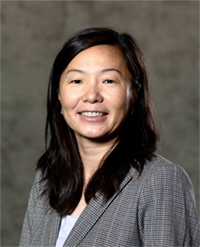
Prof. Lucy T. Zhang
Department of Mechanical, Aerospace, and Nuclear Engineering
Rensselaer Polytechnic Institute
Computational Multiphysics: From Immersed Methods to Emerging Computational Paradigms
ABSTRACT: In this talk, the speaker will discuss computational methods for complex multiphysics problems, with an emphasis on immersed finite element formulations for strongly coupled systems involving fluid flow, structural deformation, and moving interfaces. The talk will highlight multiphysics applications in biomedical and shock physics involving fluid-structure interaction, acoustics-fluid-structure interactions, and high-speed impact problems, all of which will illustrate how computational modeling can provide insight into the coupled mechanisms underlying complex physical systems. The presentation will also cover the development of OpenIFEM, an open-source computational framework for immersed finite element methods. It will then address emerging directions in computational multiphysics, including the integration of physics-based simulation with machine learning and reduced-order modeling to accelerate high-fidelity simulations and enable efficient uncertainty quantification, prediction, and design. Recent work on quantum computing for computational fluid dynamics, including quantum lattice Boltzmann methods, will provide perspective on the opportunities and challenges of emerging computing architectures for scientific simulation. Together, these efforts illustrate a broader direction in computational mechanics toward high-fidelity multiphysics modeling and emerging computational paradigms to address increasingly complex physical systems.
BIOGRAPHY: Prof. Lucy Zhang is a Professor in the Department of Mechanical, Aerospace, and Nuclear Engineering at Rensselaer Polytechnic Institute (RPI). She is a Fellow of the American Society of Mechanical Engineers (ASME). She received her B.S. from Binghamton University and her M.S. and Ph.D. from Northwestern University. She joined the Mechanical Engineering Department at Tulane University as an Assistant Professor. Due to Hurricane Katrina, she moved to RPI in 2006 and was later promoted to Associate Professor and Professor. Her research interests are building advanced and robust computational tools and software for accurate and efficient multiphysics and multiscale simulations that can be used for engineering applications in biomechanics, micro- and nano-mechanics, medicine, and defense projects. Her pioneer work in developing the Immersed Finite Element Method had been and is still being widely used in academic engineering and scientific communities. From 2021-2024 she served as a Program Director in the Mechanics cluster: Mechanics of Materials and Structures and Biomechanics & Mechanobiology programs within the Division of Civil, Mechanical and Manufacturing Innovation at The U.S. National Science Foundation. She is currently the Vice President of the U.S. Association for Computational Mechanics and will be serving the role of President in 2029. She is also the co-host of “This Academic Life” podcast.