Seminars
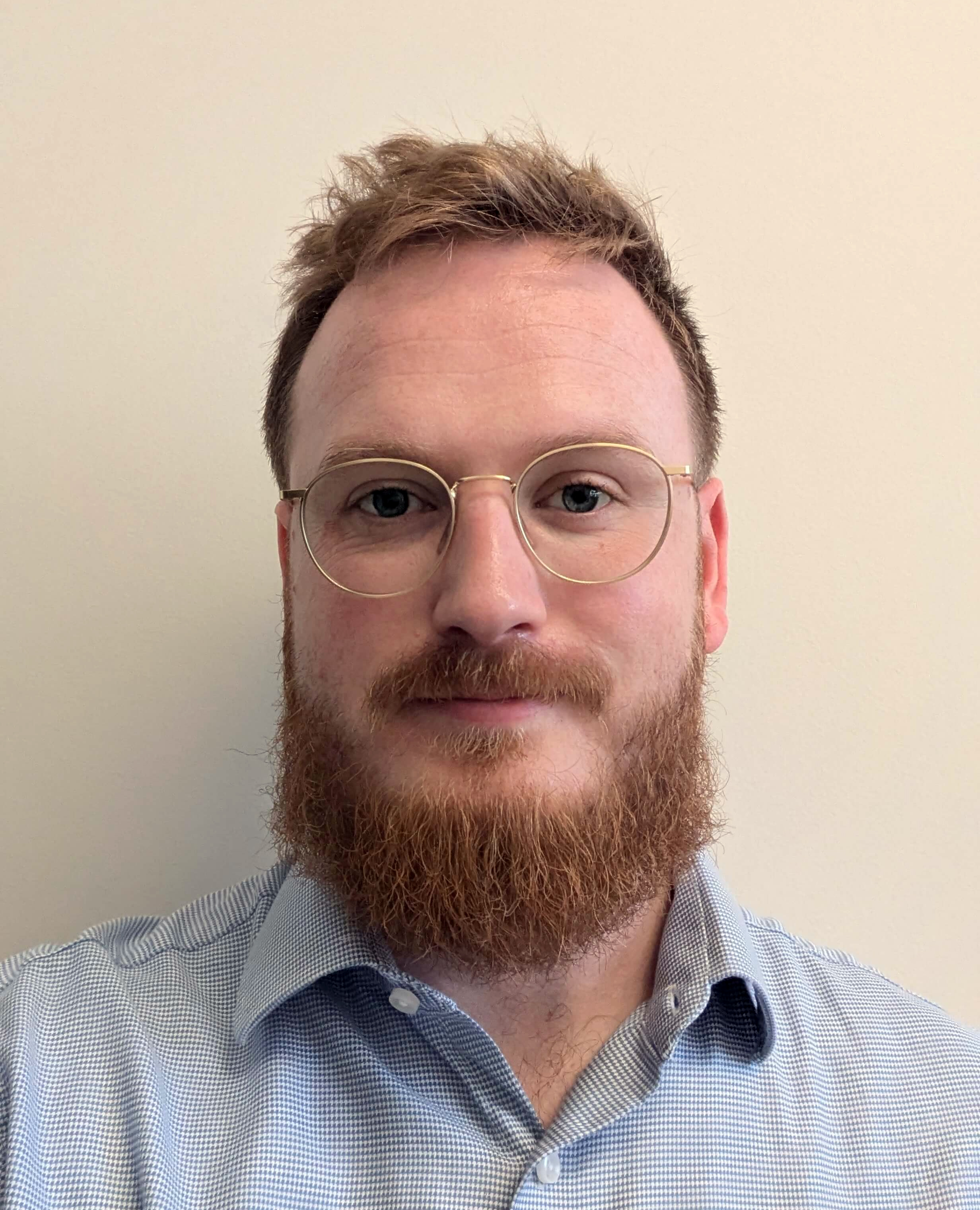
Dr. James Dark
Plasma Science and Fusion Center
Massachusetts Institute of Technology
FESTIM: An Open-Source Finite Element Framework for Hydrogen Isotope Transport in Fusion Energy Systems
ABSTRACT: Fusion energy runs on tritium, which has no natural supply, must be bred inside the machine, and is difficult to keep where it is put. Tritium dissolves into structural metals, diffuses through them, becomes trapped at microstructural defects, and permeates into coolants and containment. A plant must breed more tritium than it burns while holding inventories and losses within acceptable limits, so predicting where tritium goes has become a design-limiting question for every fusion concept under development. This talk introduces FESTIM, an open-source finite element code for hydrogen and tritium transport in materials and components. Built on the FEniCSx finite element library and exposed through a Python interface, FESTIM solves coupled diffusion, trapping, and heat-transfer problems across multiple materials and dimensions, with temperature-dependent properties, discontinuous concentrations at material interfaces, and surface-exchange kinetics. The presentation will cover the governing equations and their discretization, the code architecture and what it inherits from FEniCSx, and the verification and validation strategy, which combines analytical benchmarks, the method of manufactured solutions, and comparison against experimental data. Applications span tritium retention in plasma-facing components, permeation experiments, and full breeding-blanket analyses coupled to neutronics and computational fluid dynamics.
BIOGRAPHY: James Dark is a Postdoctoral Associate at the Massachusetts Institute of Technology (MIT) Plasma Science and Fusion Center, where he works on multiphysics modeling of tritium transport in fusion energy systems. He is a core contributor to and maintainer of FESTIM, an open-source hydrogen and tritium transport code built on FeniCSx. He received his PhD in Materials Science from Sorbonne Université in 2024 for work on tritium transport in the Demonstration Power Plant water-cooled lithium-lead breeding blanket, conducted at French Alternative Energies and Atomic Energy Commission Cadarache. At MIT, he contributes to the Liquid Immersion Blanket: Robust Accountancy molten-salt breeding experiment and manages the Salt-compatible Hydrogen barrier Investigation and EvaLuation for fusion Devices hydrogen permeation platform. He is a committed advocate for open-source scientific software.